 MATEO ZAPATA

Catalog
The clinic builds its offer here. The surgery catalog, the inventory that accompanies the bill, and the packages sold as a set feed the quote, the demand, and the sketch.
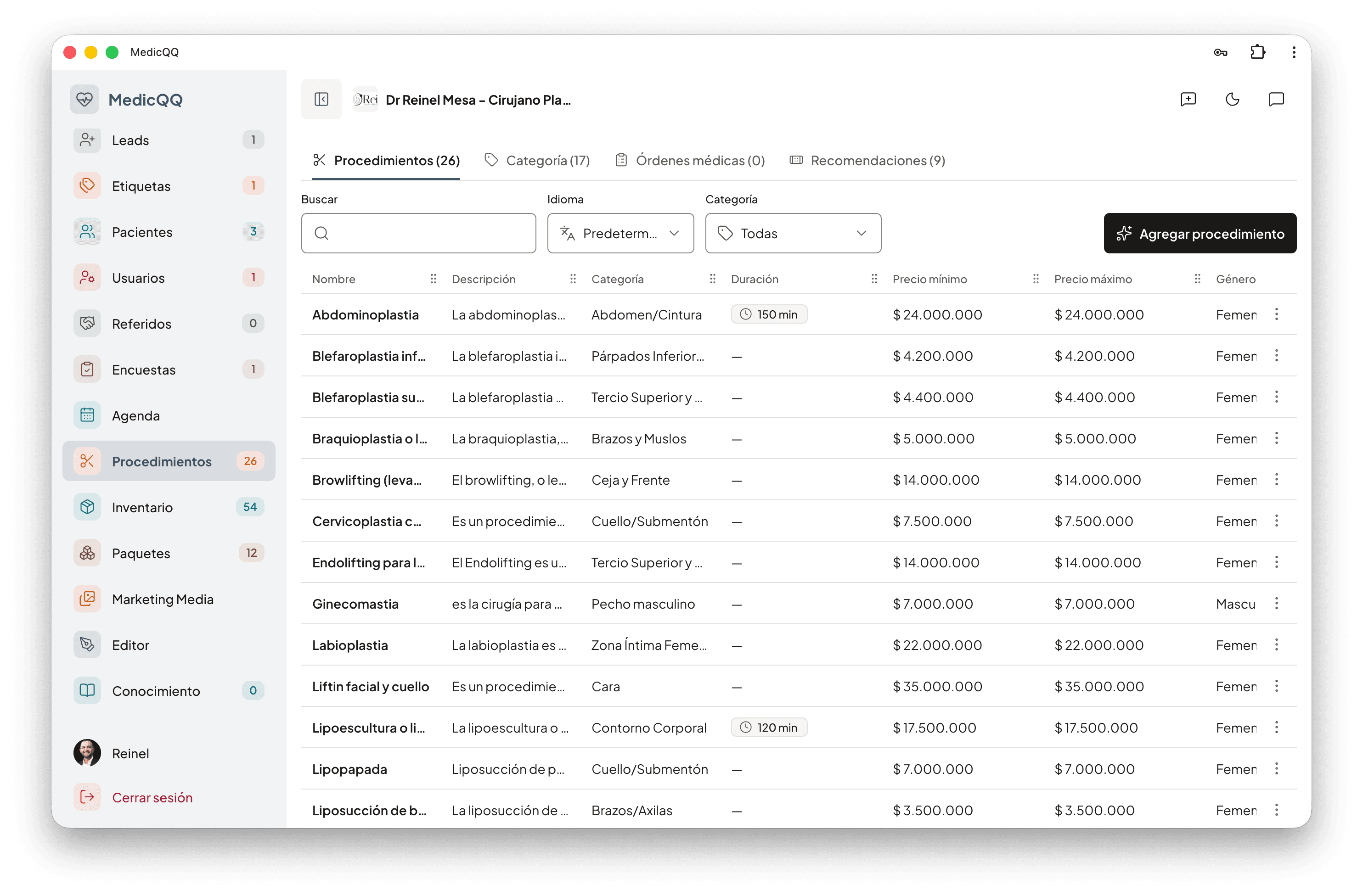
Procedures
A procedure is a surgery in that clinic’s catalog. It has a price range in one currency, the sexes it applies to, and, if known, the operating-room minutes. Those minutes are what the hours schedule adds on the preferred appointment day. The name is enough. The model places it in a body zone of the clinic — abdomen, breast, face — and, if that zone does not exist, proposes it. It can also draft the clinical description the patient will read, or the clinic writes it. The name and the description stay in the source language and can be asked for in another. The list is searched by name and filtered by zone. Each procedure can carry marketing photos, with a title and an order. A quote only offers procedures whose price is in that quote’s currency. The same catalog feeds demand — how many patients asked for it and how many were quoted —, the complication rate of that surgery, and the marks on the sketch.
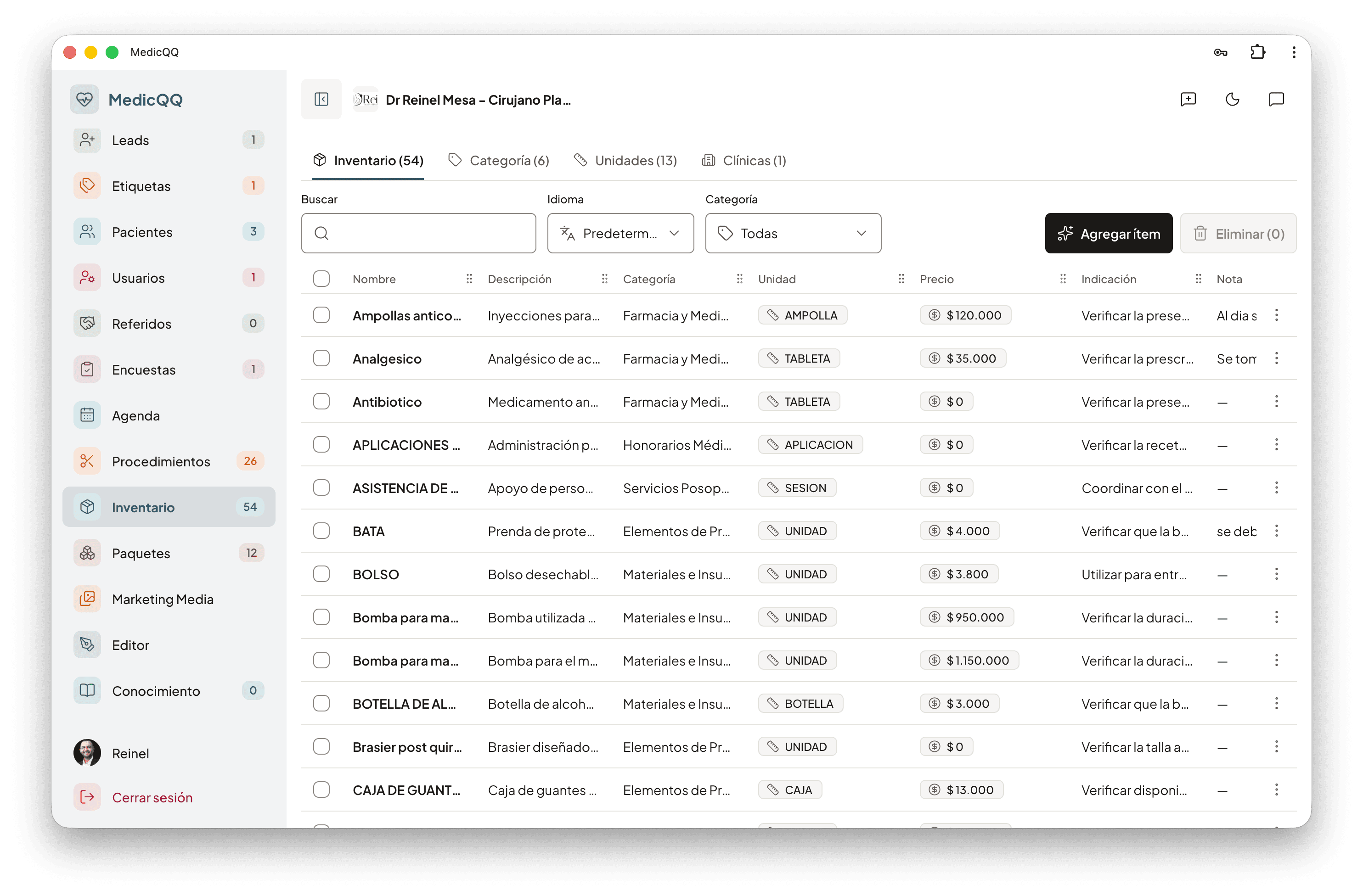
Inventory
Inventory is what accompanies the surgery and enters the bill: the garment, the hospital night, the anesthesia, the supply. Each item has a category, a unit of measure, a list price, a description, and a short hint for whoever is quoting. On create, the model can classify it, write the description and the hint, and propose the unit. If the clinic already knows the category and the text, it leaves them fixed. Stock is a quantity per item. The board puts it beside what was quoted in the period, so purchasing sees what the commercial pipeline is consuming. An item is withdrawn from the catalog, also in bulk, and stops being offered in new packages and quotes. In the ticket mix, these items are the part of the budget that is not the procedure fee, broken down by category.
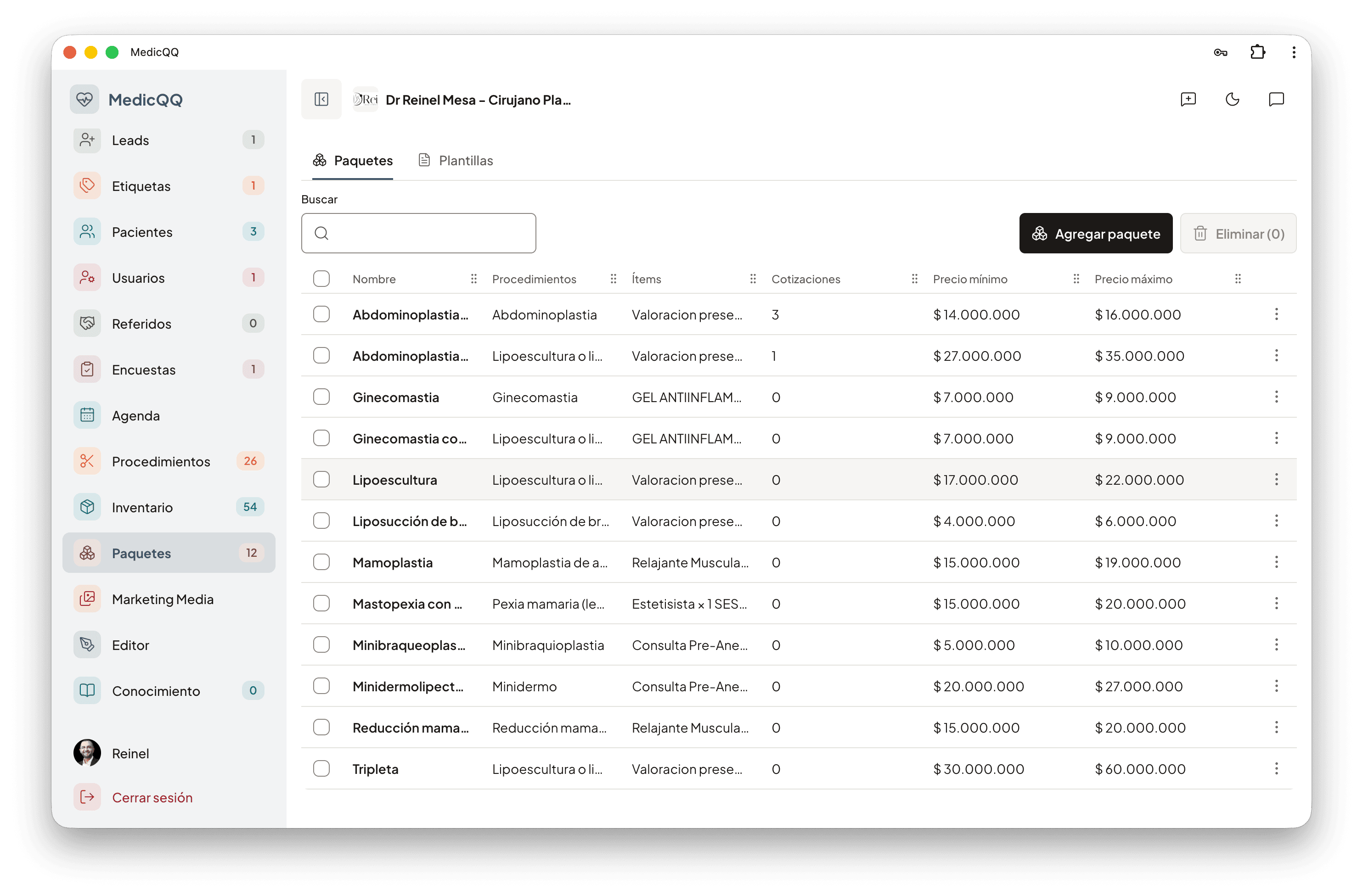
Packages
A package is the assembled offer: one or more surgeries, one or more items with quantity and unit, and a price range in one currency. It has to carry at least one surgery or one supply. It is what the clinic sells as a set — a mommy makeover with hospital and garment — before a patient exists. The quote can be born from that package. The package remains as the origin: the price and the lines the patient sees are those of the quote, and the package currency has to match the quote’s. Each package counts how many quotes used it. It is cloned under another name and takes the procedures, the items, and the plans. A plan is the package’s surgical text, up to eight thousand characters, with a name and an order. One can be the default plan. That text is what the quote’s welcome message can use when it explains the offer.