 MATEO ZAPATA
Appointments
Picture a gastroenterology clinic where schedules fill up… and also empty out. Appointments that cancel, patients who do not show, lost slots, and no one clear whether the problem is the patient, the IPS, or the operation itself. Worse: sometimes the appointment is assigned late, the patient waits too long, and care opportunity breaks without anyone measuring it. That is the real pain: wasted demand, underused suites, and leadership without a reliable map. Cancelled, Missed, and Traceability exists for that. It is the indicator that turns the schedule into evidence: what is lost, why it is lost, and how timely care actually is.
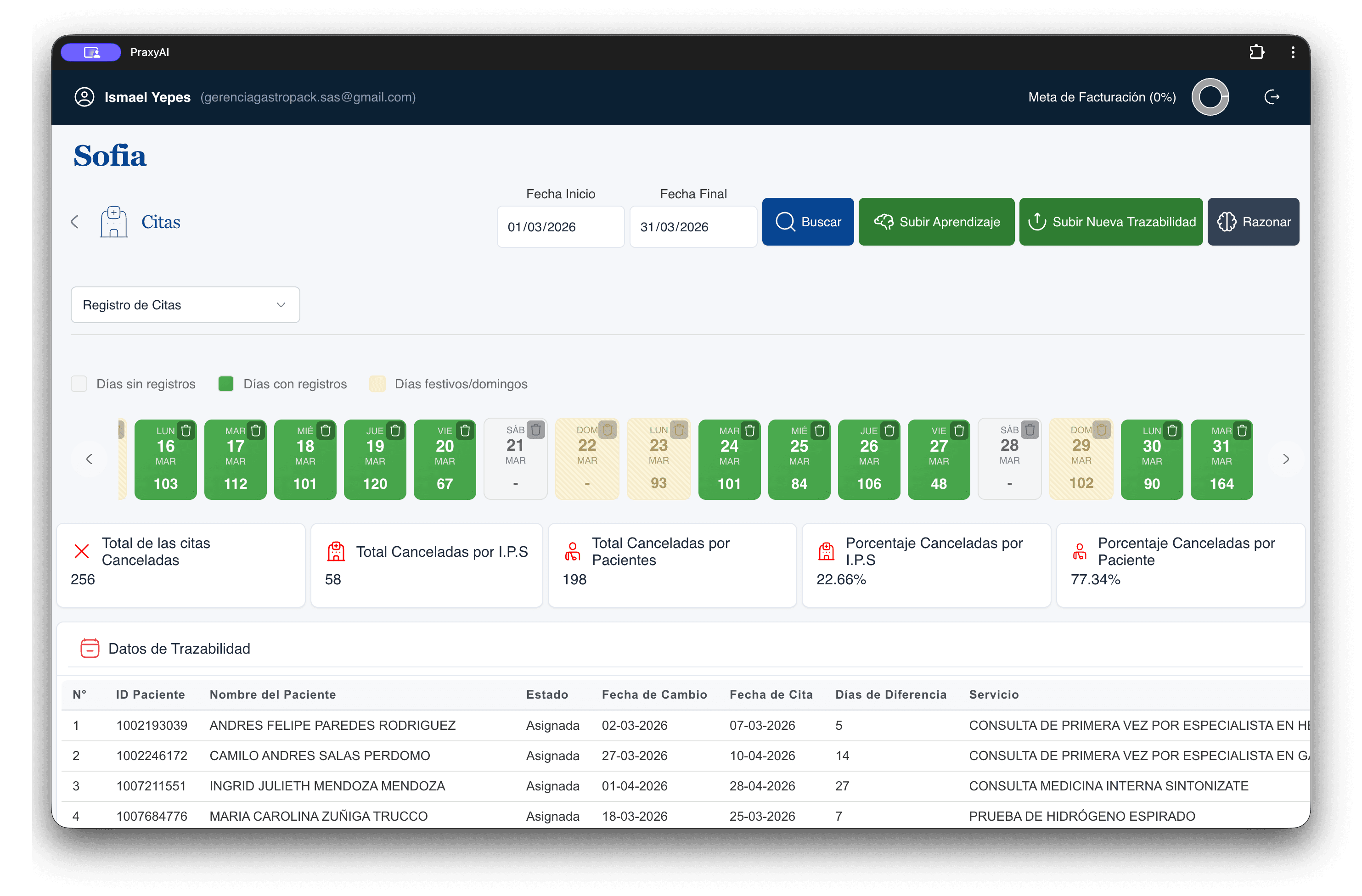
Load and traceability
You load appointment operations and, separately, traceability: when an appointment was assigned or changed versus when it was supposed to happen. With the loaded-days calendar you see which dates are ready, filter, and correct when needed.
Cancellations with cause
Knowing “how many fell through” is not enough. It separates total cancellations, cancellations by the IPS, cancellations by the patient, and the percentage weight of each origin. You stop arguing opinions and attack the real cause.
By service category
Shows which service types or categories concentrate no-shows and cancellations. Losing a general consult is not the same as losing an endoscopy or a high-value procedure: the operating and financial impact changes.
Appointment traceability
The heart of the module: patient-by-patient detail — who they are, status, when it changed, when the appointment was, days of difference, service, entity, client type, and opportunity status. You do not only see the final schedule; you see whether the clinic is offering care on time.
Care opportunity
Rolls traceability into a management view: average opportunity by client type, by service, and for appointments that were actually attended. You spot whether a segment waits too long or a service is straining capacity.
Clinic rules
You define what counts as cancelled, missed, or assigned, which client types enter the analysis, and the minimum opportunity threshold. Not a generic report; it speaks your operation’s language.
Executive brief with Sofia
Sofia shows where losses concentrate, which services or segments strain the schedule, and what to prioritize. The result: fewer lost slots, clearer cancellations and no-shows, and a real reading of care opportunity — with evidence, not gut feel.