 MATEO ZAPATA
Contacts
Explore shows you someone nearby. The next risk in the informal economy is giving the number too soon — or never giving it and losing the meeting. Contacts is not an open address book: nobody sees your WhatsApp, email, or phone because you appeared in a search. There is a request, a yes or a no, and only then do channels open. If a deal happens, a transaction starts, it is verified with a code, and both sides can leave a review.
Ask permission to contact
From an offer or a match you do not message the owner: you ask permission. Value: respect — the other person decides whether to meet you; you do not harvest data, you ask for a door.
Pending — received and sent
Unresolved requests live here. If it was sent to you, you accept; if you sent it, you can cancel. Until acceptance, personal data stays hidden. Value: control and privacy — nobody enters your life from an accidental click.
Accept unlocks the channels
On accept, the other person can see how to reach you (WhatsApp, phone, email…). Value: the meeting becomes practical — no longer a card in chat, but someone you can actually call.
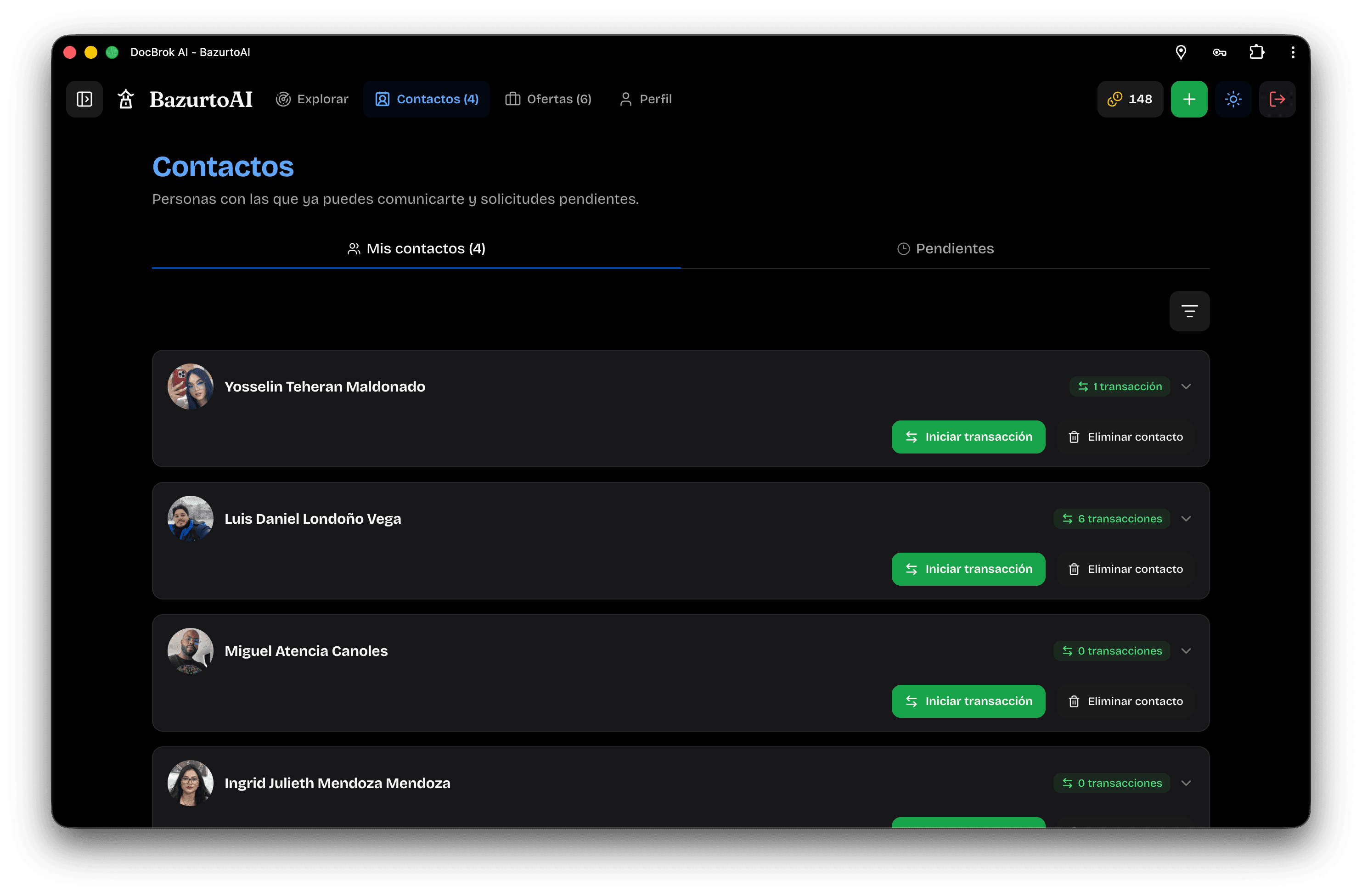
My contacts — the living agenda
Only people with mutual permission appear: who they are, their post, their channels, and whether a deal is in progress. Value: a network of yours, not a list of strangers — the people you can actually work with.
Filters
Search by name, shop, or channel; see whether the request was received or sent; filter by the latest transaction status. Value: as the network grows it does not become a drawer — you find “the fridge person” or the deal still waiting to verify.
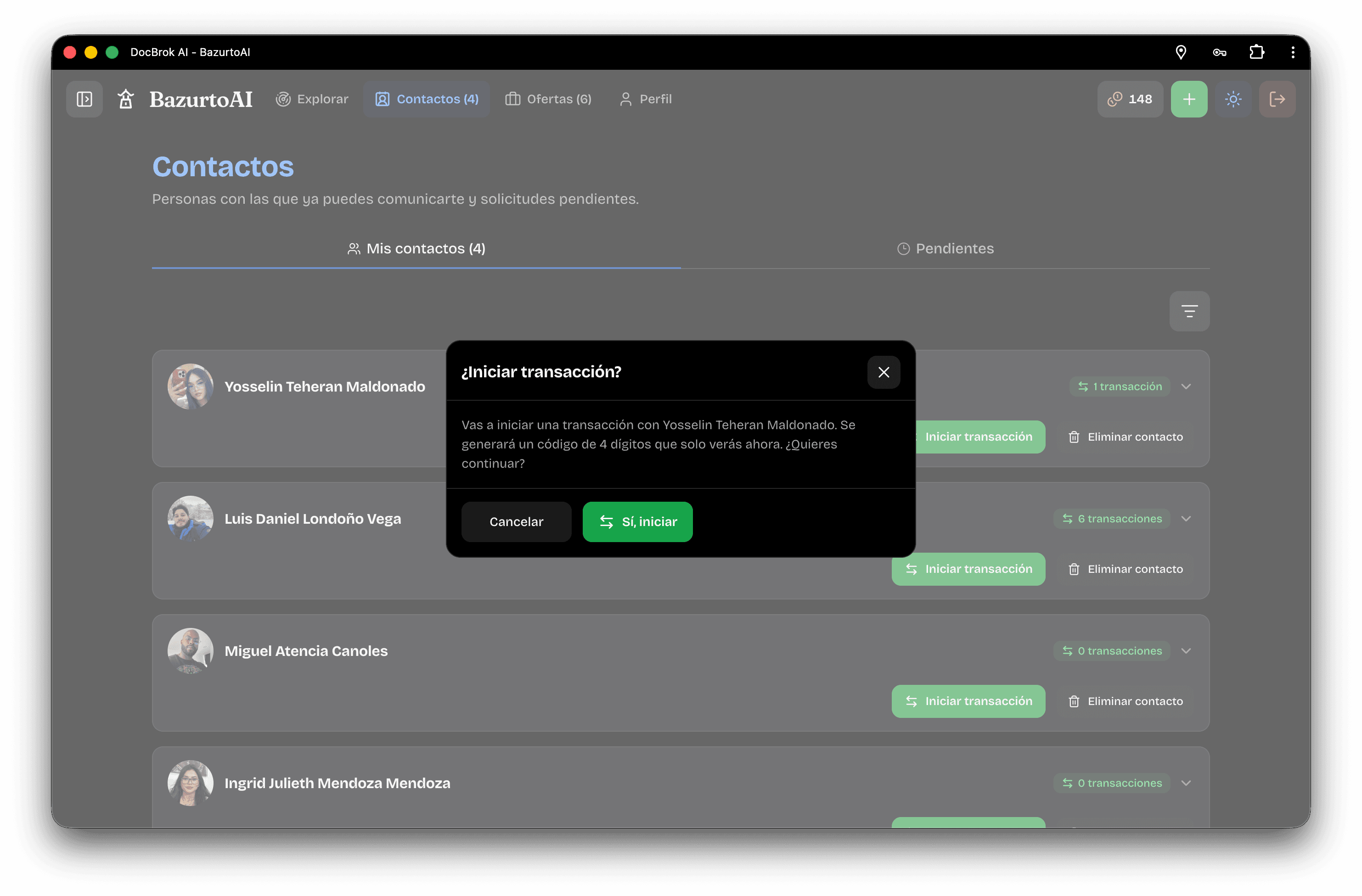
Start transaction
When there is an agreement, the demanding side starts the deal and receives a 4-digit code. Value: a clear moment when the exchange starts existing for both sides — not an endless “I’ll pay you / I’ll deliver” on WhatsApp.
Verify with the code
The other person enters that code. Value: proof of meeting — not a like, but “yes, we met / yes, it happened”; it cuts down “they said yes and disappeared.”
Reviews from both sides
After verification, each rates the other; the deal does not fully close until both opine (or the flow reaches completed). Value: local reputation — the next person does not trust blindly.
History per contact
On each person in the agenda you see how many deals you have had and open the history. Value: memory — you know if you already worked with someone, how it went, and which role you had.
Cancel or delete
You can withdraw a request you sent, cancel a pending deal, or remove someone from the agenda. Value: you are not trapped — the network is yours, not an eternal list.